The customer was a specialty insurance MGA doing roughly $150M in revenue — the kind of business whose finance operation was never designed so much as accumulated. Every carrier relationship, every program, every bank lockbox had added a layer. By the time we met them, order-to-cash ran across carrier paper, half a dozen bank accounts, and a lattice of spreadsheets only a few people fully understood.
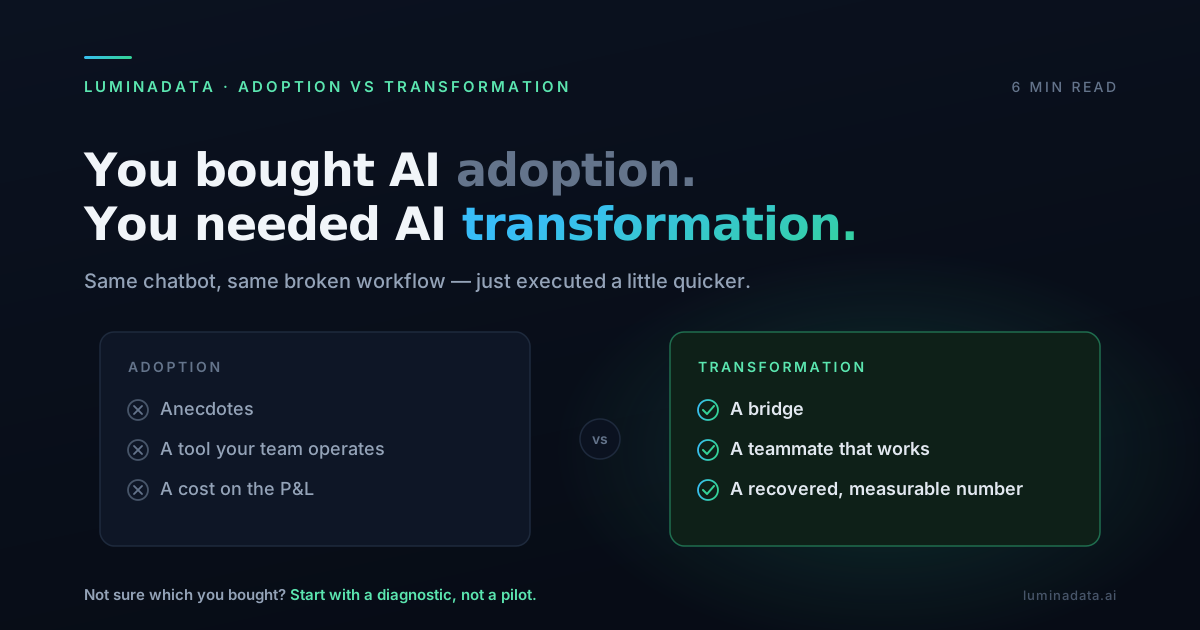
They did not need another chatbot. They needed to know where the money was leaking — and then have someone close the gaps. Here is how the engagement actually went.
What the diagnostic found
Lumina Discover started where every engagement does: with the people who run the work. Agents interviewed the finance team, traced how premium actually moved from bordereaux to bank to ledger, and mapped the full order-to-cash process at the business-rule level.
The map surfaced what the org chart hid. Premium was collected and allocated across multiple carriers and programs, reconciled by hand every cycle. Bordereaux consumed days of skilled time and still produced variances no one could explain. Commissions were owed in two directions, trued up on different cycles in different systems. Cash arrived across several lockboxes and was matched to policies manually. Every opportunity was scored by EBITDA impact and ranked.
The diagnostic did not produce a recommendation. It produced a number — and an order to go after it in.
The five agents we deployed
Activate deployed agents across the lifecycle, configured on the rules Discover had already mapped — no rebuilding from scratch, no system migration:
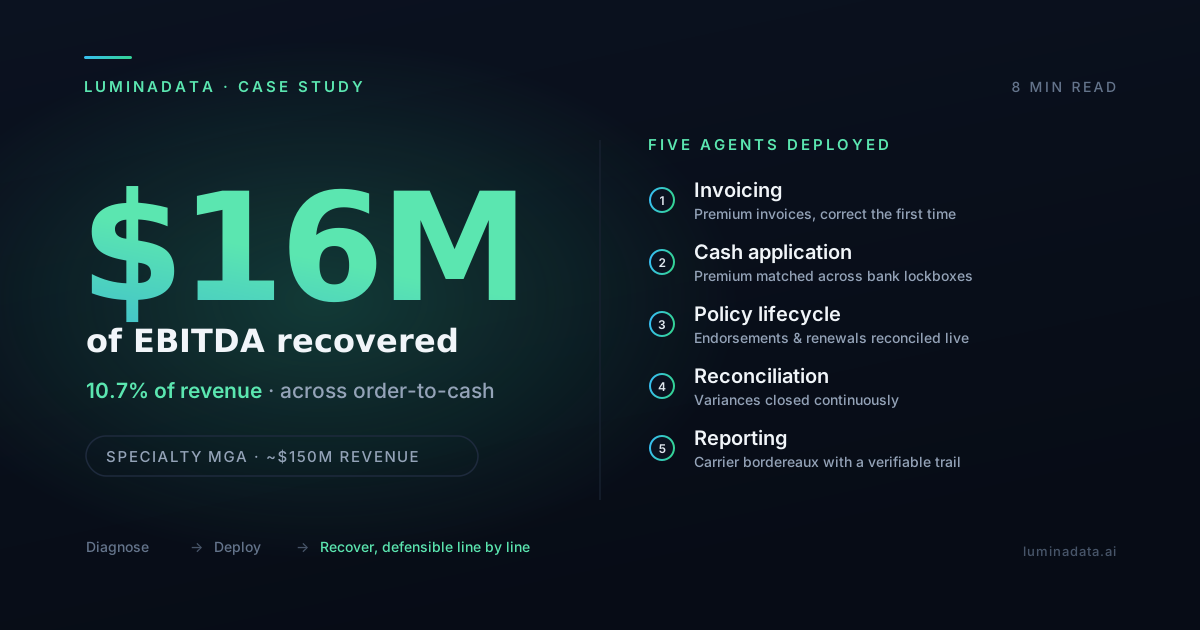
- Invoicing — generated and issued premium invoices across programs and carriers, correctly the first time.
- Cash application — matched incoming premium across bank lockboxes to the right policies, autonomously.
- Policy lifecycle — kept endorsements, cancellations, and renewals reconciled to finance in real time.
- Reconciliation — reconciled premium, commission, and bank activity continuously, closing the variances audits used to find.
- Reporting — produced carrier bordereaux and management reporting on schedule, with a verifiable source trail.
The number
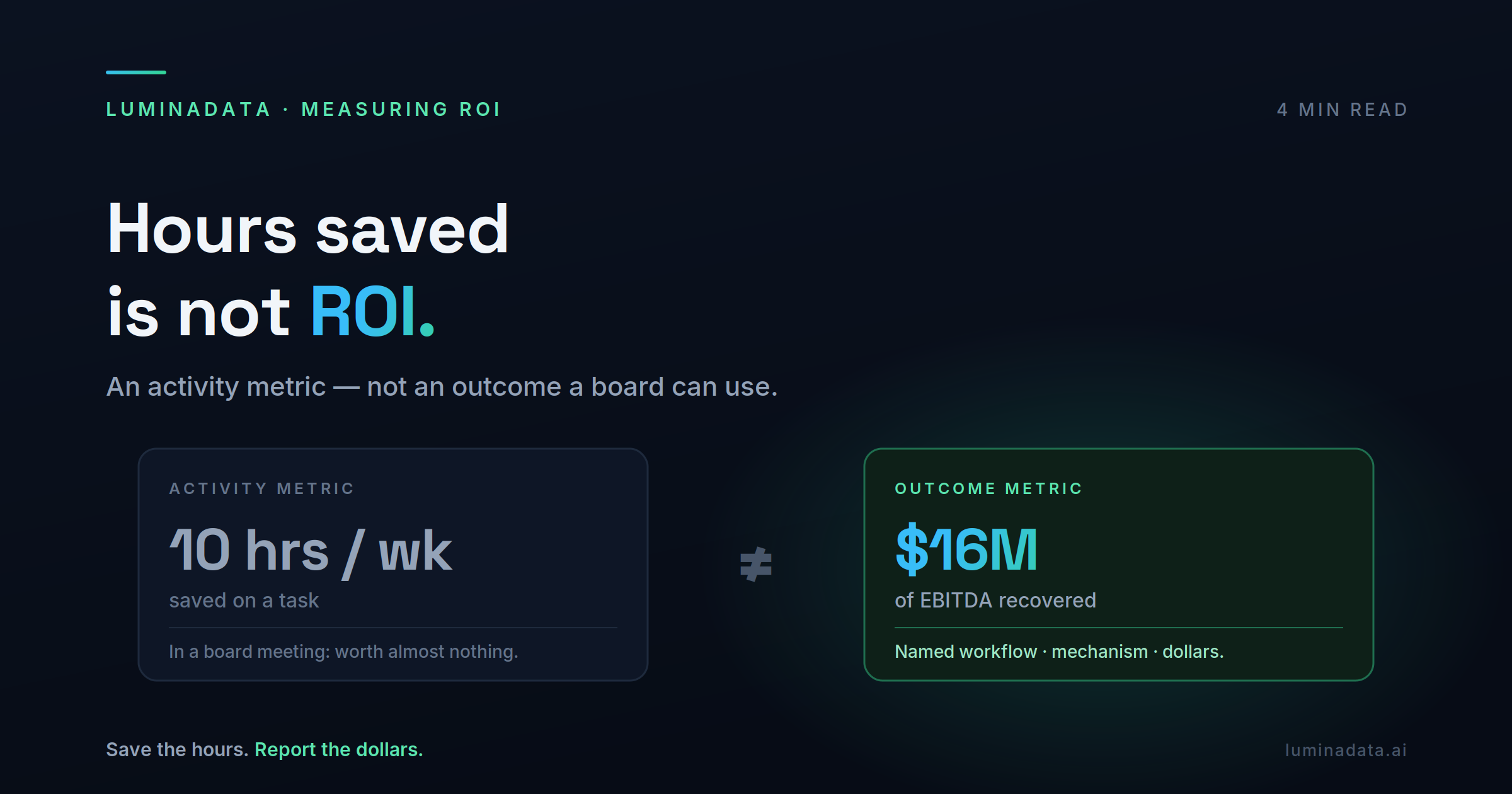
Across order-to-cash, the engagement recovered $16M of EBITDA — 10.7% of revenue. Not the flattering top of our 10–15% range; a number the team could put in front of their board and defend line by line, because every dollar traced back to a specific workflow and a specific agent.
Why it generalizes
Nothing about this was unique to one carrier's setup. The pattern — premium complexity, manual reconciliation, two-way commissions, cash scattered across banks — is how specialty insurance finance works almost everywhere. The leverage was not a clever tool. It was diagnosing the real process first, then deploying agents exactly where the diagnostic said the money was.